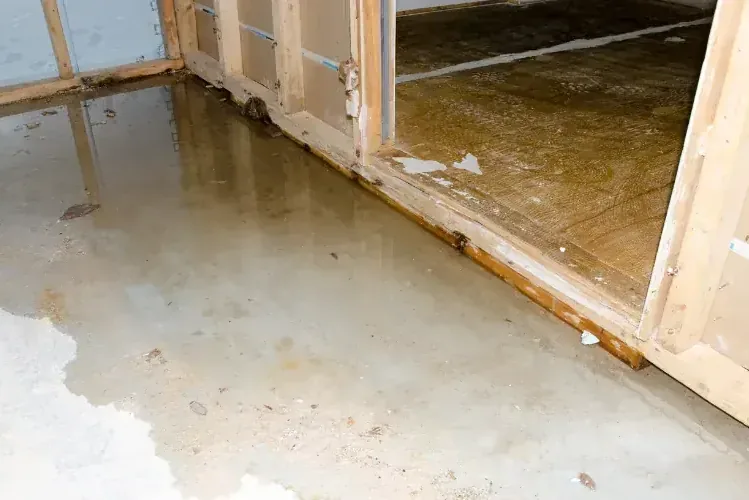
The community of La Crescenta-Montrose sits on alluvial fans built by debris carried down Halls Canyon and Pickens Canyon. That landscape explains why storm water matters here. This article describes how runoff reaches a house, what the history behind the local catch basins is and how extraction and drying restore the rooms.
Key takeaways
- Alluvial fans under the community were built by debris carried down Halls Canyon and Pickens Canyon.
- February is the wettest month, with about 5.25 inches of rain on average.
- After the 1934 flood, catch basins and concrete storm drains were built, and debris basins were rebuilt later.
- Storm water that enters a house is contaminated and heavy, and is handled differently from a clean leak.
- Extraction comes first, then cleaning and drying until readings return to normal.
A community built on canyon fans
La Crescenta-Montrose is an unincorporated community in Los Angeles County. La Crescenta lies north of Interstate 210 and Montrose lies south of it, on a south-sloping slope between the San Gabriel Mountains and the Verdugo Mountains.
Alluvial fans under the community were built by debris carried down Halls Canyon and Pickens Canyon. Water that comes off the mountains follows the same general path.
- The San Gabriel Mountains and Angeles National Forest form the northern edge.
- The Verdugo Mountains and the San Rafael Hills lie along the southern and western sides.
- Average annual rainfall is about 20.6 inches, with February the wettest month at about 5.25 inches.
Older homes and the first rooms to get wet
Most homes here are older single-family houses, with 83 percent of the housing stock built before 1979. About 76.5 percent of homes are single-family, well above the county average of 54.6 percent.
In older houses, carpet, wood floors and lower rooms are usually the first places storm water reaches. Garages and entryways often take it first.
- Carpet and pad near entries soak up water quickly.
- Wood floors can swell or cup when water sits beneath them.
- Cabinet bases and door bottoms wick moisture upward.
A respectful look at the 1934 flood
In the last week of December 1933, winter storms dropped 12 inches of rain on the mountainside. On New Year's Day 1934, a flash flood came out of Pickens Canyon, crossed Foothill Boulevard and ran down into Montrose.
The January 1934 flood claimed 32 lives. A monument to the flood victims was dedicated on January 1, 2004 in Montrose.
After the flood, the U.S. Army Corps of Engineers and Los Angeles County built catch basins and concrete storm drains. Debris basins were rebuilt later, helped along by debris incidents in 1978.
How storm water reaches a house today
Today's storm drains and basins handle most rainfall. Still, an intense winter storm can send water across driveways, patios and yards faster than drains can carry it.
That water can reach a house through doors, garage openings or low windows.
- Water sheeting across a driveway into an attached garage.
- Runoff pushing under a door or through a worn threshold.
- Water overflowing a gutter and running down a wall into a window well or low wall.
- Standing water at a low point in a yard soaking toward the foundation.
Documenting the loss
Insurance coverage for storm water varies, and some policies treat flood differently from other water damage. Reading the policy early avoids surprises later.
A clear record helps whichever way the claim goes.
- The date and time the water entered, and the weather that day.
- Photos of the entry point and each wet room.
- A list of items removed or discarded.
- Written notes from the crew about readings and equipment.
Why storm water is not like water from a leak
A broken supply pipe puts clean water into a home. Storm water has crossed streets, yards and drains, and arrives carrying soil and other material.
That is why crews treat it as a contaminated loss. Porous materials that soaked it up are often removed rather than saved.
- Silt settles into carpet, seams and baseboards.
- Carpet pad soaks up water and rarely dries well in place.
- Cardboard, particle board and soft drywall lose strength quickly.
Safety before cleanup
Standing water can hide electrical and slip hazards. Power to wet areas should be off, and anyone entering should wear boots and gloves.
What a household does first
A good first response is calm and organized. The aim is to protect people, limit the spread and collect proof of the loss.
The next steps are simple.
- Stay out of rooms with water near outlets or cords.
- Lift small items, rugs and boxes onto dry surfaces.
- Photograph the water, the entry point and each damaged item.
- Call a local crew that handles storm losses.
What to tell the crew on the first call
A clear first call saves time. The crew needs to know where the water came in, how deep it is and which rooms are affected.
Having a few details ready helps the team bring the right equipment and plan the work.
- Where the water entered and when it started.
- Whether it is clean-looking rain or muddy runoff.
- Which rooms and floors are wet.
- Whether power to the area is on or off.
Extraction, cleaning and drying
The crew starts by removing water and loose silt. The water extraction page explains that step, and the water extraction page for La Crescenta-Montrose covers local homes.
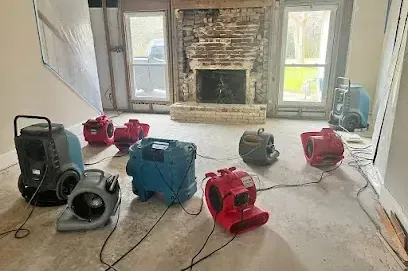
After extraction, soaked carpet, pad and soft drywall are removed as needed. Surfaces are cleaned and treated, and the framing and floors are dried with air movers and dehumidifiers.
The storm runoff and flash flood cleanup page and the La Crescenta-Montrose storm cleanup page describe the full process.
- Standing water and silt removed.
- Wet pad and soft materials taken out.
- Surfaces cleaned and treated.
- Moisture readings taken until the structure is dry.
- Mold becomes a risk after a day or two, so drying starts early.
Keeping the next storm outside
A few steps before winter reduce the chance of water reaching the house. None of them replaces the work of the local storm drains, but all help.
February is the wettest month, so the work is best done in fall.
- Replace worn door seals and thresholds.
- Clear gutters and extend downspouts.
- Check that soil and paving slope away from the house.
- Keep drain inlets free of leaves and debris.
Questions
What is an alluvial fan?
It is a fan-shaped deposit of soil, rock and debris carried down a canyon by water. The land under La Crescenta and Montrose was built this way by Halls Canyon and Pickens Canyon.
Which month is the wettest in La Crescenta-Montrose?
February, with about 5.25 inches of rain on average. Annual rainfall is about 20.6 inches.
What was built after the 1934 flood?
The U.S. Army Corps of Engineers and Los Angeles County built catch basins and concrete storm drains. Debris basins were rebuilt later.
Is storm water in a house safe to touch?
No. It carries soil and other material, so gloves, boots and careful handling matter.
Can wet carpet be saved after storm water?
Sometimes, if it is lifted and dried quickly. The pad beneath is more likely to be replaced.