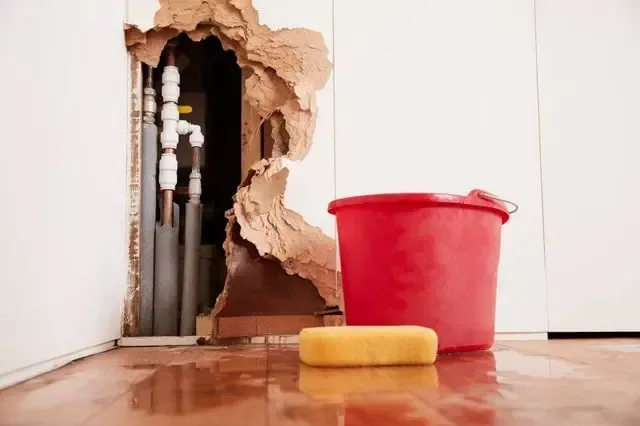
In August 2019, a leak in an 8-inch steel main on Pennsylvania Avenue left 15 homes temporarily without water. The pipe was first installed in 1946. That event is a useful reminder that pipe ages, and it raises a practical question for homeowners: what does an age-related pipe failure look like inside a house?
Key takeaways
- The August 2019 break involved a steel main first installed in 1946 and owned by the Crescenta Valley Water District.
- About 83 percent of local housing was built before 1979, so many homes have older materials.
- A pipe failure inside a house can be sudden or slow, and both cause damage.
- The first step is to shut off the water, then call a crew to extract and dry.
- Drying the wall, ceiling and floor cavity matters as much as removing the visible water.
What happened in August 2019
A leak in an 8-inch steel main on Pennsylvania Avenue left 15 homes temporarily without water. The pipe was first installed in 1946 and is owned by the Crescenta Valley Water District.
There was initial confusion over whether the pipe belonged to Crescenta Valley Water District or Glendale Water & Power. Parts of the area near the edges fall under Glendale, such as the Honolulu Boulevard corridor.
- Crescenta Valley Water District provides water and wastewater services in the community.
- Edge areas may fall under a different provider.
- A homeowner should know which utility serves the street before a problem starts.
What the event says about older pipe
A utility main and a pipe inside a house are not the same thing, and the record does not say anything about local home plumbing. Still, the event shows that buried metal pipe can reach an age where leaks and breaks happen.
The community has 7,375 housing units, and 83 percent of the housing stock was built before 1979. Very little of it is new construction.
Many homes are old enough that their plumbing may have been repaired or replaced over time.
- A house with original plumbing should be checked from time to time.
- A house with partial repairs may have different pipe types joined together.
- A house with newer plumbing can still have failures at fittings or hoses.
Signs of a failing pipe inside a home
Some failures are sudden. A fitting splits, a joint lets go or a pipe bursts under pressure, and water pours into a wall or ceiling.
Others are slow. A pinhole leak inside a wall can run for weeks before a stain appears.
- A sudden drop in water pressure or a noise like running water when nothing is on.
- A water bill that rises with no change in use.
- Damp drywall, bubbling paint or a musty smell inside a wall.
- A warm or wet spot on a floor or a stain spreading across a ceiling.
- Discolored water from a faucet after a pressure change.
Pressure changes and what they can do
When a main is repaired or shut off, pressure in homes on that street can change. A weak spot in a house pipe may show itself when water returns.
A household that sees a new leak after a service interruption should shut the water off and have the pipe checked.
Slow leaks and hidden damage
A slow leak can be harder to catch than a burst. Water travels along framing and collects out of sight, and the first sign may be a soft floor or a stain on a wall below.
A household that notices a small stain should not wait. Moisture readings can show whether the area is still wet, and early action usually means a smaller repair.
- Stains that grow slowly or return after cleaning.
- Baseboards that soften or separate from the wall.
- Flooring that lifts, buckles or feels spongy underfoot.
The first steps when a pipe lets go
Speed matters most. Every minute of flow soaks more drywall, flooring and insulation.
The steps below keep a burst from spreading.
- Shut off the main water valve for the house.
- Turn off power to wet areas if it is safe to reach the panel.
- Open a faucet at the lowest point to drain remaining water.
- Move furniture and valuables out of the wet area.
- Take photos and video before anything is moved.
- Call a local crew for extraction and drying.
Finding the main shutoff before it is needed
The best time to find the shutoff valve is before a leak. Many households do not know where it is until water is already spreading.
A short check during a calm moment turns a scramble into a quick action later.
- Find the main valve and make sure it turns freely.
- Show every adult in the home where it is.
- Label it so a guest or a neighbor can find it.
- Know which utility serves the street, in case the problem is outside the home.
How extraction and drying work
The crew removes standing water first. See the water extraction page for the local process.
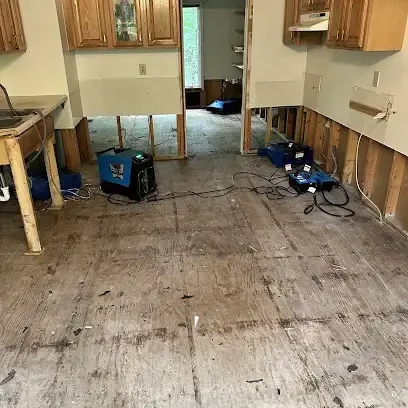
Wet drywall, insulation and flooring are checked with a moisture meter. Materials that cannot dry in place are removed, and the rest is dried with air movers and dehumidifiers.
The burst pipe water damage page for the community describes the work from the first call through final readings.
- Standing water extracted from floors.
- Wet drywall and insulation cut back where readings call for it.
- Flooring lifted or dried in place, depending on type.
- Equipment checked and adjusted until readings fall to normal.
What the equipment does
Air movers push dry air across wet floors and wall bottoms. Dehumidifiers pull moisture out of the room so it does not settle into other materials.
The drying team takes readings on the first day and returns to measure again, so equipment stays only as long as it is needed.
Why drying inside the wall matters
A wall can look dry on the surface while the cavity stays wet. If that moisture is left alone, it can grow mold in a day or two and weaken the framing over time.
That is why crews check inside the wall instead of trusting what the paint shows. The burst pipe page for the area explains how the work is done.
Insurance and records
Sudden pipe bursts are often covered, while slow leaks and wear may not be. Reading the policy early helps the household know what to expect.
A clear record helps either way.
- Photos of the pipe, the wet area and every damaged item.
- A list of items removed or discarded.
- Notes from the plumber and the drying crew.
- The date and time of discovery and the time the water was shut off.
Questions
What happened in August 2019?
A leak in an 8-inch steel main on Pennsylvania Avenue left 15 homes temporarily without water. The pipe was first installed in 1946.
Does that event mean the pipes inside homes are failing?
No. A utility main is different from household plumbing, and the record says nothing about local home plumbing. It is just a reminder that pipe ages.
Which utility serves a given address?
Crescenta Valley Water District provides water and wastewater services in the community, but parts near the edges fall under Glendale. A resident should confirm which provider serves the street.
What should a homeowner do first when a pipe bursts?
Shut off the main water valve, turn off power to wet areas if it is safe and call a crew for extraction and drying.
How can a household tell if a wall is still wet?
A moisture meter gives the answer. Paint can look fine while the wall cavity stays damp.