The city used septic systems for decades before a centralized sewer was proposed in the early 1990s and built in phases. That history means sewage can reach a home in more than one way. This article explains what a backup looks like, who handles sewage in the city and why contaminated water needs a trained cleanup.
Key takeaways
- Sewage is handled by the LA County Sanitation District, and the centralized sewer was built in phases from the 1990s.
- A small remnant of property owners were still being asked to connect to the sewer in 2018, so a few homes may have a different setup.
- Any water from a toilet, tub or floor drain that overflows is contaminated from the first moment.
- Households stay out of the affected area, stop using water and call a crew trained for sewage cleanup.
- Cleanup removes porous materials, cleans and disinfects surfaces and dries what remains.
A city that moved from septic to sewer
La Cañada Flintridge sits in the Crescenta Valley at the base of the San Gabriel Mountains. For decades its homes relied on septic systems.
A centralized sewer was proposed in the early 1990s and built in phases. A major expansion to over 1,000 residential units began in 2004, and by 2018 a small remnant of property owners on septic systems were still being asked to connect.
- Sewage is handled by the LA County Sanitation District.
- The La Cañada Water Reclamation Plant is a small plant next to La Cañada Country Club.
- Because the build-out came in phases, the sewer connection history is not the same from one street to the next.
Why that history matters for a homeowner
A homeowner who knows how the house is connected knows where to start when something goes wrong. The record does not say which homes are on which system, so each household has to check its own paperwork or ask a plumber.
What a sewage backup looks like
A backup does not always arrive as a flood. It often starts with small signs that are easy to dismiss.
Catching them early can turn a large cleanup into a small one.
- A toilet that gurgles or bubbles when another fixture drains.
- Slow drains in several rooms at once.
- A sewage smell near a floor drain, tub or cleanout.
- Dark, foul water rising in a tub, shower or the lowest drain in the home.
- Wet, discolored flooring beside a toilet or washer standby drain.
Backups from different causes
A backup can start for many reasons. A blockage inside the home affects one fixture.
A blockage farther along affects several at once.
Because a few properties may still have older septic systems, a problem there can look different. The result inside the house is the same: contaminated water on the floor that needs trained handling.
- One slow drain usually points to a problem inside the home.
- Several backed-up fixtures point to a blockage farther along.
- Sewage surfacing in a yard may point to a septic system problem.
The first steps for a household
Sewage carries bacteria and other contaminants. Limiting contact and holding back further water use comes before anything else.
The short list below keeps the loss from growing.
- Hold off on flushing, rinsing and running the washer, since each use adds to the overflow.
- Close the door to the affected room and keep kids and pets elsewhere.
- Skip bare feet and bare hands near the water.
- Record the scene with photos and short notes before moving anything.
- Reach out to a local crew that handles sewage losses.
What not to do
Strong drain chemicals, mixed cleaners and household vacuums all make a sewage spill worse. The fumes harm the lungs, and suction can throw contaminated moisture into the air.
Why every backup is treated as contaminated
Water that has passed through a sewer pipe is not like water from a supply pipe. Even a small amount can carry bacteria that make people ill.
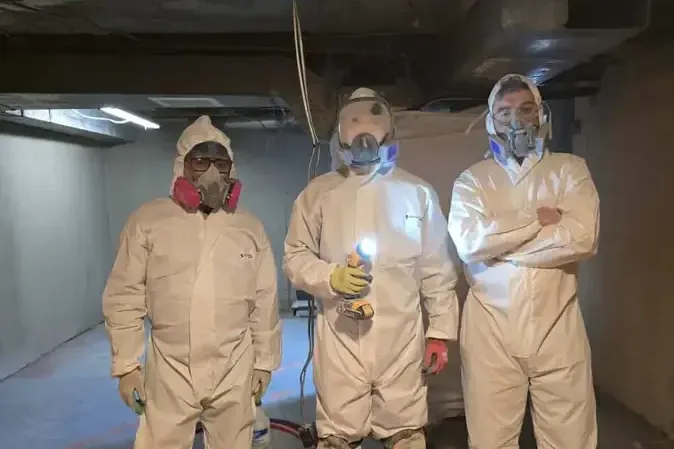
That is why a crew wears protective equipment, sets up a controlled work area and bags waste for disposal. The sewage backup cleanup page describes the process, and the La Cañada Flintridge sewage backup page covers local homes.
Backups tied to septic systems are different in cause but not in risk. The water in the house still needs the same careful removal.
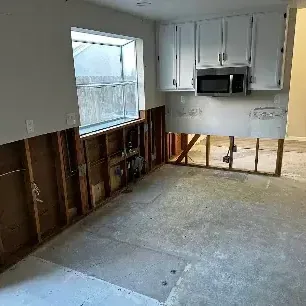
- Porous materials such as carpet, pad and soft drywall are removed.
- Hard surfaces are cleaned and treated with a disinfecting product.
- Contaminated waste is bagged and carried out of the home.
How the cleanup and drying proceed
Cleanup is a series of stages. Each stage is checked before the next begins.
Drying follows the cleaning, since damp framing and subfloor can grow mold in a day or two if left alone.
- Standing sewage extracted from floors and low spots.
- Affected materials cut out and removed.
- Surfaces cleaned, treated and rinsed.
- Framing and subfloor dried with air movers and dehumidifiers.
- Moisture readings taken to confirm that the area is dry.
Early warning checks
The sewer backup warning check helps a household look for early signs before a backup grows. It does not replace a plumber, but it can show when to call for one.
After the cleanup: when the home is ready again
A cleanup ends when the work has been checked, not when the water is gone. Surfaces are inspected, readings are taken and the household is told what was removed.
Rebuilding comes last. New pad, carpet, drywall and trim go in only after the structure has stayed dry on repeated readings.
Households that had a septic problem rather than a sewer problem may need the system itself looked at before the area is used again.
- Walk the cleaned area with the crew lead and ask what was removed.
- Keep copies of the final moisture readings for the insurer.
- Ask a plumber to confirm the source is fixed before any finish work begins.
- Replace materials only after the framing has stayed dry across visits.
Who handles the cause and who handles the damage
A plumber or the sanitation district can look at the cause, whether it is a blockage, a failed connection or a problem outside the property. The cleanup crew focuses on the damage inside the home.
The record does not say who owns the sewer lateral for any given house, so a household should confirm that with the right office rather than assume.
Insurance coverage for sewer or drain backup is often a separate endorsement. Checking the policy early tells the household what to expect.
- Photos of the source and every damaged room.
- A list of discarded belongings.
- Notes from the plumber and the cleanup crew.
- The date of the first sign of trouble and the date of cleanup.
Questions
Who handles sewage in La Cañada Flintridge?
Sewage is handled by the LA County Sanitation District. A household with a problem inside the home calls a plumber for the cause and a trained crew for the cleanup.
Do all homes in the city use the sewer?
Most do, but the sewer was built in phases, and as of 2018 a small remnant of owners on septic systems were still being asked to connect. A household should check its own situation.
Is a small toilet overflow still contaminated?
Yes. Any overflow that contains sewage should be treated as contaminated, even if it looks small.
Can carpet be saved after a sewage backup?
Usually not. Carpet and pad that soaked up sewage are generally removed because they cannot be made safe.
How soon should drying start?
As early as possible. Damp materials left in place can start growing mold in a day or two.