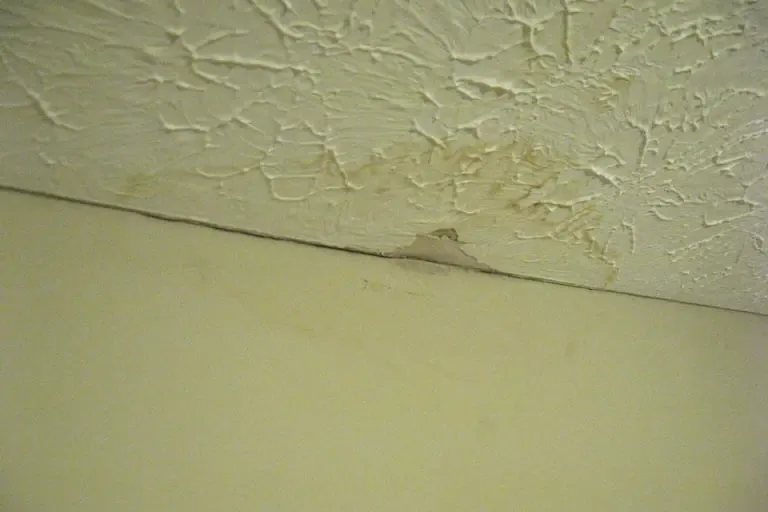
Winter storms can arrive in long, heavy bands across the foothills. The San Gabriel Mountains can magnify rainfall totals during these atmospheric river events, and hillside roofs take the brunt. This article follows a leak from the attic to the ceiling and explains how the wet cavity is protected and dried.
Key takeaways
- Rain falls mostly in winter and averages about 21 inches a year, with atmospheric river storms producing intense runoff.
- A ceiling stain is often not directly below the roof opening, because water travels along framing first.
- In the first hours, protect belongings, catch drips and photograph the damage.
- Wet insulation and drywall are removed or dried quickly so that a small leak does not become a large repair.
- A roofer fixes the opening, and a drying team handles the wet building materials.
Why winter storms are hard on hillside roofs
La Cañada Flintridge has a Southern California inland valley climate with mild winters. Rain falls mostly in winter and averages about 21 inches a year.
During winter atmospheric river storms, the San Gabriel Mountains can magnify rainfall totals and produce intense runoff in the foothills. A roof that handles an ordinary shower can fail when rain arrives hard and fast.
- Heavy rain exposes worn flashing, cracked sealant and lifted shingles.
- Wind-driven rain can push water sideways under roofing edges.
- Overflowing gutters can send water back up under the roof edge.
How a leak travels from attic to ceiling
Water rarely drips straight down from a roof opening. It runs along sheathing, rafters and insulation until it finds a spot where it can drop or soak into a ceiling.
The stain on a ceiling shows where the water ended up, not where it came in.
- A ring with a darker rim shows the spot has been wet more than once.
- A sagging patch holds water behind the paint and may drop without warning.
- A damp odor in a bedroom after a storm hints at a leak overhead.
- A stain that grows only when it rains is a roof problem rather than a plumbing one.
Sorting roof water from pipe water
Not every ceiling stain comes from the roof. A mark that shows up on a dry afternoon, or sits under a bathroom, may point to a supply or drain pipe.
The ceiling leak page for La Cañada Flintridge explains how the two are told apart.
The first hours inside the house
The roof is not a safe place to be in a storm, so the first work is inside. The aim is to limit how much of the home the water can reach.
These steps buy time until the roof can be repaired.
- Slide beds, sofas and electronics out from under the wet spot and cover whatever stays.
- Set out a bucket and spread towels or plastic sheeting around the drip.
- Turn off ceiling fixtures and fans below a damp ceiling when it is safe to reach the switch.
- Take photos of the ceiling, the drip and anything that was damaged.
- Phone a roofer about the opening and a drying team about the wet materials.
What the drying team does with the wet cavity
Insulation holds water against the ceiling, so soaked insulation is usually removed. Drywall that has sagged or lost strength is cut back to dry framing.
The team opens only what readings show is wet. The goal is to remove moisture while keeping as much of the building as possible.
- A meter and a thermal camera show how far the moisture reaches.
- Soaked insulation is bagged and taken away.
- Sagging drywall is trimmed back to solid board.
- Fans and dehumidifiers then pull the remaining moisture from framing and walls.
Why drying cannot wait
Damp materials left alone for a day or two can start growing mold. The roof leak water damage page explains how these losses are handled from the first call through drying.
Who does what
A roof leak has two jobs: closing the opening and drying the damage. A roofer handles the first and a water damage crew the second, and neither job replaces the other.

Hillside homes and water that does not stay put
On a slope, water runs downhill from the roof, the yard and the street. Some of it can reach a door or a low room even when the roof is sound.
The city's elevation runs from about 970 feet near Devil's Gate Dam in the Arroyo Seco up to about 2,400 feet in the highest neighborhood. A hillside property sits somewhere on that range, and local runoff patterns vary.
- Roof water, yard runoff and street runoff can all reach the same home.
- A dry roof does not rule out storm water entering at a door.
- The roof leak page for La Cañada Flintridge covers the roof side of the problem.
Hillside details that raise the stakes
Foothill houses often have long rooflines, dormers and decks on sloping lots. Each added feature gives rain another seam to test.
Upper elevations of the city occasionally see trace amounts of snow during a winter storm, which melts slowly against roof edges and adds to the load on flashing.
- Roofs near the mountain front face the first and heaviest rain.
- Snow melt on upper streets can sit against flashing for hours.
- Leaf and needle buildup in valleys slows runoff and invites seepage.
Getting ready before the next storm
A short check before winter costs far less than a leak in January. A roofer can look at flashing, valleys and sealant before the rains.
Homeowners can also look for early signs from the ground and from the attic hatch.
- Look for lifted or cracked roofing near valleys and vents.
- Check the attic for stained wood, damp insulation or daylight.
- Keep gutters and downspouts clear.
- Photograph the roof each fall so later damage is easy to compare.
- Keep the contact for a local drying team where it is easy to find.
Reading the weather before it hits
Storm warnings in the foothills often arrive a day ahead. That window is enough to make a home a little safer before the first band of rain.
December and January highs run in the low to mid 60s with lows in the low 40s, so storms here bring rain rather than ice. The risk is water, not frozen pipes, which is why attention goes to roofs, gutters and door seals.
Households that act early also have an easier time reaching a drying team, since crews fill up fast once a big storm passes.
- Clear gutters and downspouts a day before a forecast storm.
- Move stored boxes away from exterior walls and attic eaves.
- Charge phones, and keep a flashlight near the attic hatch.
- Save the number of a drying team in a spot every adult can find.
Questions
Why does a ceiling stain show up away from the leak?
Water travels along roof framing and insulation before it drops. The stain marks where water collected, not where it entered.
Is it safe to puncture a bulging ceiling?
A bulge holds trapped water and can fall suddenly. If it is safe to stand clear, a small hole lets water drain into a bucket, but a drying team can also handle it.
What is an atmospheric river?
It is a long band of moist air that brings heavy rain during winter storms. In the foothills it can produce intense runoff.
Will a dry-looking ceiling be fine?
Not always. Insulation and framing above can stay wet after the surface looks dry, so moisture readings are the only reliable check.
Who repairs the roof and who dries the ceiling?
A roofer repairs the opening, and a water damage team removes and dries the wet materials inside. The two jobs often overlap.