Heavy rain in the foothills does not always stay outside. When runoff sheets across a driveway or patio, it can slip under a door and spread across a floor before anyone notices. This article walks through what Altadena households do first, what the extraction crew removes and how wet rooms are dried.
Key takeaways
- Water that enters from outside carries soil and debris, so it is treated differently from a clean supply leak.
- Keep people and pets out of wet rooms and stay away from outlets and cords sitting in water.
- Lift small items, photograph the damage and call a local crew before the water soaks into carpet pad and baseboards.
- Extraction comes first, then drying with air movers and dehumidifiers until moisture readings return to normal.
- Fixing the grade, door seals and drainage afterward is what keeps the next storm out.
Why foothill rain behaves differently in Altadena
Altadena sits directly north of Pasadena in the foothills of the San Gabriel Mountains, with Angeles National Forest along its northern side. The mountains push moist air upward, which is why the community averages about 21.09 inches of rain a year, over 6 inches more than nearby Los Angeles.
Most of that rain falls from December to March. January averages 4.80 inches and February 5.74 inches, so the heaviest storms arrive when the ground is already wet.
On a slope, water does not soak in and wait. It runs downhill across driveways, patios and walkways until it meets a threshold.
- A steady slope sends sheet flow toward the lowest door, often a garage or a back patio.
- Saturated soil in midwinter holds less, so more rain runs off.
- Short bursts of intense rain overload gutters and downspouts before drains can keep up.
How runoff finds its way under a door
Doors are built to shed a light rain, not to hold back moving water. Once a thin sheet of water is pressing on a threshold for a while, it finds the smallest gap.
A homeowner usually notices a dark edge on the carpet or a damp smell before seeing any puddle.
- Worn weatherstripping or a door sweep that no longer touches the sill.
- Sliding patio doors with tracks that fill with water and spill over the inside edge.
- Garage doors with gaps at the bottom seal, where water runs straight onto a slab and then toward interior walls.
- Cracked caulk at the base of a frame or a gap where a threshold meets the flooring.
Garages, patios and sliding doors
Some doors take the worst of it. A garage door faces the driveway and usually sits at the bottom of the slope, so water that runs down the drive arrives right at the seal.
Patio and sliding doors are the next most common. Their tracks are meant to drain, but when leaves or grit clog the weep holes, the track fills and spills inside.
A back door on a covered porch can look safe and still take water, because a gutter overflow above it sends a sheet straight down the glass and across the sill.
- Garage floors are slabs, so water spreads outward and then moves under the wall into the house.
- Interior doors from the garage often have wood jambs that wick moisture upward.
- Wet carpet near an entry may feel dry on top while the pad underneath is soaked.
The first steps for a household
Safety comes before saving belongings. Standing water near outlets, power strips or a plugged-in appliance can carry electricity.
Once the area is safe, the goal is to limit how much the water can reach while the extraction crew is on the way.
- Switch off power to the wet room at the panel only if the panel is dry and easy to reach.
- Lift small furniture, rugs, shoes and cardboard boxes onto dry surfaces.
- Wipe legs of wood furniture and set foil or plastic under them so stain does not transfer to carpet.
- Take photos and short video of the water, the door and every affected surface before anything is moved.
- Keep children and pets out until the area is cleaned, because runoff can carry soil and bacteria.
What not to do
A household vacuum is not made for standing water and can create a shock hazard. Walking through the room also spreads soil into dry areas and pushes water deeper into the pad.
What the extraction crew pulls out first
Fast removal does the most to limit damage. A truck-mounted or portable extractor lifts standing water from hard floors and pulls it out of carpet.
The crew then checks what is still holding moisture. Carpet pad soaks up water like a sponge and rarely dries well in place, so it is often cut out and removed while the carpet is lifted for drying.
- Standing water and loose silt vacuumed from hard floors and thresholds.
- Soaked carpet pad removed; carpet lifted, cleaned and dried or replaced.
- Baseboards pulled where water has wicked behind them.
- Wall bottoms probed with a moisture meter, and wet drywall cut back only where readings call for it.
Water hidden behind baseboards
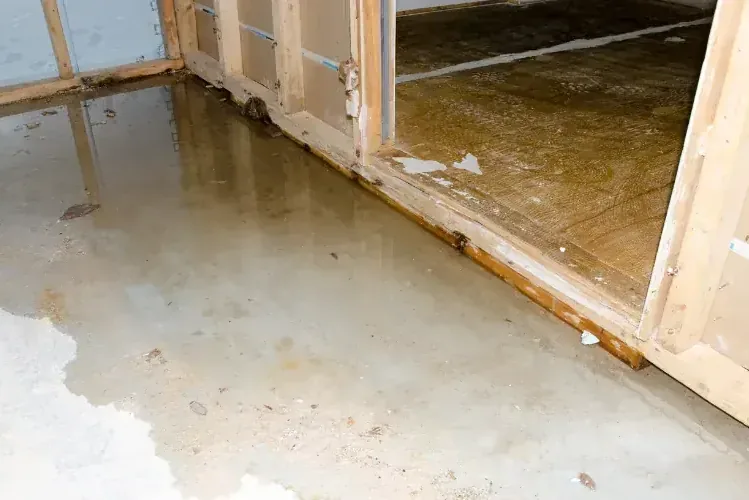
Water that slipped under a door does not stay on the surface. It moves sideways under flooring and behind baseboards, following the easiest path.
A room can look nearly normal while the floor edge stays wet. This is why crews check beyond the visible puddle with a moisture meter.
Laminate and wood floors are especially sensitive. Boards can swell at the seams or cup when moisture sits beneath them, and the damage worsens each day water is left in place.
- Press along the baseboard: a soft or crumbling spot means water has been there.
- Look for dark staining at carpet edges and tack strip rust.
- Notice a musty smell in a closet or room that borders the entry.
How the rooms are dried
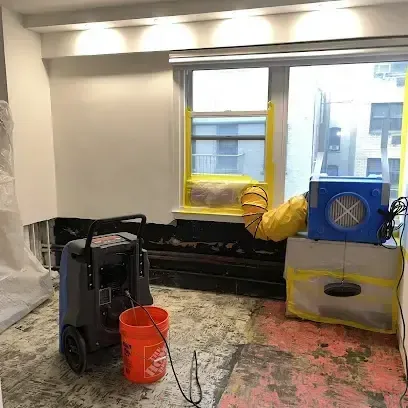
Extraction removes the water that can be seen. Drying handles the water that cannot.
Air movers push dry air across floors and wall bottoms while dehumidifiers pull moisture out of the room.
The drying team takes readings on day one and returns to measure again, so equipment stays only as long as it is needed. See how this work is described on the structural drying service page, or try the drying time estimator for a rough idea.
Speed matters because damp materials left alone for a day or two can start to grow mold, which turns a water cleanup into a bigger job.
What to keep for an insurance claim
Storm water coverage varies by policy, and some policies treat flood differently from other water damage. Reading the policy early avoids surprises later.
A clear record helps whichever way the claim goes.
- Date and time the water entered, and the weather that day.
- Photos of the door, the water line on walls and each damaged item.
- A list of items removed or discarded.
- Written notes from the crew about readings and equipment.
Keeping the next storm outside
Once the home is dry, a few small changes make a repeat less likely. Most of them involve moving water away from the house before it ever reaches a door.
The storm runoff and flash flood cleanup page covers how these losses are handled, and the water extraction page explains the removal step.
- Replace door sweeps and weatherstripping before December.
- Clear gutters and extend downspouts well past the foundation.
- Check that paving and soil slope away from doors, not toward them.
- Keep drains and low patio inlets free of leaves and debris.
Questions
Is rainwater that comes under a door clean?
No. Water that crosses a yard, a drive or a street picks up soil and other material on the way. It is handled with more care than a clean supply leak, and porous materials that soaked it up are often removed.
Can wet carpet be saved after storm water?
Sometimes. If the carpet is lifted quickly, cleaned and dried, it can often stay. The pad underneath is more likely to be replaced.
Should a homeowner call the insurance company or a restoration team first?
Many people do both at once. The crew can start extraction and drying right away while the household reads the policy and opens a claim.
How can a homeowner tell if a wall is wet inside?
A paint bubble, a soft baseboard or a stain wicking upward from the floor are signs. A moisture meter gives the real answer, which is why crews measure before deciding what to open.
Why does Altadena get more rain than the surrounding flatter areas?
The San Gabriel Mountains lift moist air as it moves inland, which wrings out more rain over the foothills. Altadena averages over 6 inches more a year than nearby Los Angeles.