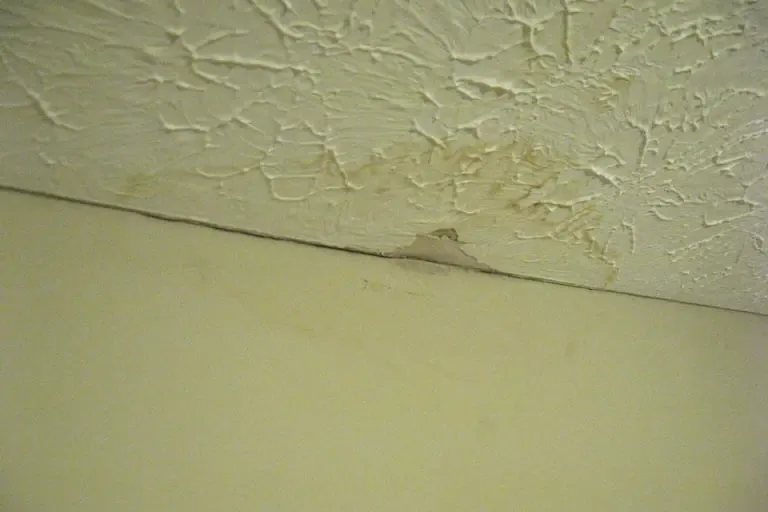
Altadena has a well known group of homes with steep roofs and multiple gables, built between 1924 and 1926. That roof shape sheds rain well, but every place two roof planes meet is a spot where water can find a way in. This article shows how a ceiling stain traces back to a roof leak and how wet insulation and drywall are dried.
Key takeaways
- Valleys, flashing and joins between gables are common places for winter rain to enter.
- A ceiling stain is often far from the actual roof opening, because water runs along framing before it drips.
- In the first hours, protect the room, catch drips and photograph the damage.
- Wet insulation and drywall are removed or dried quickly so the leak does not turn into a larger repair.
- A roofer fixes the opening and a drying team handles the wet building materials.
A roof style with a long local history
In Altadena, 160 homes were built from 1924 to 1926 with steep roofs and multiple gables. The neighborhood later became a heritage area.
The steep pitch drains rain fast. The many gables add valleys, dormers and joins, and each one is a place where a leak can begin.
- Valleys where two roof slopes meet carry a lot of water in a storm.
- Flashing around chimneys, vents and dormers can lift or crack as it ages.
- Gable ends and eaves can let wind-driven rain reach the wall below.
Why winter is the leak season
Altadena receives about 21.09 inches of rain a year, mostly from December to March. January averages 4.80 inches and February 5.74 inches.
After a dry summer, roof materials have baked in the sun. The first heavy storms often show where something has gone wrong.
How a ceiling stain traces back to the roof
Water rarely drips straight down from the roof opening. It runs along rafters, sheathing and insulation before it reaches a spot where it can soak a ceiling.
A stain by a light fixture or a vent may sit a long way from the actual opening.
- Brown rings at the edge of a stain point to repeated wetting.
- A bulge or sag means water is trapped above the ceiling.
- Peeling paint and a musty odor suggest the leak has been present for a while.
- Stains that appear only after rain, not after a shower, suggest the roof is the source.
Roof leak or plumbing leak?
A stain that grows only in or after a storm points to the roof. A stain that appears on a dry day, or below a bathroom, is more often a supply or drain leak.
The ceiling leak page covers both situations.
Following the water path
Water usually enters at a high point and travels downhill along the roof deck, a rafter or a pipe before it drops. The stain shows where it finally fell, not where it came in.
On a roof with many gables, there can be several possible paths, so a roofer often needs to work from the attic side as well as the outside.
- Start from the stain and look up and uphill for the nearest roof join.
- Check whether more than one stain lines up along the same rafter.
- Note which storm direction made the stain appear.
What a household does in the first hours
A roof leak during a storm is stressful, and the roof is not a safe place to be in the rain. The work inside is what limits the damage.
These steps buy time until the roof can be repaired.
- Move furniture and valuables away from the stain and cover what cannot move.
- Place a bucket under the drip and lay towels or plastic sheeting around it.
- Poke a small hole in a bulging ceiling to let trapped water drain into a bucket, only if it is safe to stand beneath it.
- Photograph the ceiling, the drip and any damaged belongings.
- Call a roofer for the opening and a drying team for the wet materials.
Protecting the room below
Even a small leak can ruin a rug or a piece of furniture if it drips for hours. A few minutes of preparation near the stain can prevent a lot of secondary damage.
Clear the floor under the drip and cover remaining items with plastic. Roll up area rugs and move electronics away from the wall below the leak.
How wet insulation and drywall are dried
Insulation soaks up water and holds it against the ceiling, so soaked insulation is usually pulled out. Drywall that has sagged or lost its strength is cut back to dry framing.
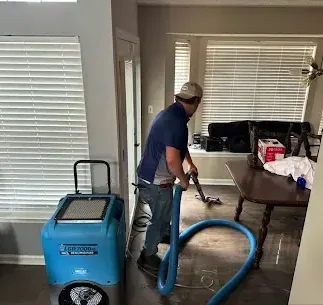
The drying team opens only what readings show is wet. The goal is to remove the moisture while keeping as much of the building as possible.
- Moisture meter and thermal camera readings to map the wet area.
- Wet insulation bagged and removed.
- Drywall cut back to solid material where needed.
- Air movers and dehumidifiers set to dry framing and surrounding walls.
Why speed matters
Damp materials left alone for a day or two can start growing mold. Waiting turns a roof repair into a larger project with hidden damage in the attic and walls.
The roof leak water damage page explains how these losses are handled from the first call through drying.
The usual order of repairs
A roof leak repair usually follows a set order. The opening is sealed first, then wet materials are removed and dried, and only after that are finishes replaced.
Skipping the drying step and painting over a stain hides the problem without solving it, and damp framing can keep causing trouble behind the paint.
- Roofer seals or replaces the damaged section.
- Drying team removes wet insulation and drywall and dries the framing.
- Readings confirm that materials are dry.
- Drywall, paint and finishes are replaced last.
Chimneys, dormers and vents
Every opening in a roof is a spot that needs careful sealing. Chimneys, dormers and vent pipes each have flashing around them, and flashing is built from thin metal that can crack, lift or pull loose over time.
On a multi-gable roof, the number of such openings goes up. A leak near a chimney may look like a ceiling problem on the floor below, but the cause sits on the roof.
- Stains in a line along an upstairs wall often follow a roof join.
- Water marks near a fireplace or chimney chase suggest flashing trouble.
- Drips at a vent or light fixture can start at a roof penetration far above.
Keeping an older roof ready for rain
A short check before December costs far less than a leak in January. A roofer can inspect valleys and flashing before the rain starts, and the Altadena water damage restoration team can be lined up in advance in case a storm still gets through.
Homeowners can also look for early signs from the ground and from inside the attic. If a ceiling does get wet, the structural drying service page explains how the cavity is dried.
- Look for lifted or cracked shingles near valleys.
- Check the attic for daylight, damp wood or stains after a storm.
- Keep gutters clear so water does not back up under the roof edge.
- Photograph the roof condition each fall to compare with later damage.
What an attic check can reveal
The attic is where a roof leak is easiest to see. Dark, damp wood or flattened insulation shows where water has been running.
A homeowner should be careful in the attic. Stepping off the framing can break through a ceiling, so a roofer or inspector is the safer choice for anything beyond a quick look from the hatch.
A flashlight, a phone camera and a careful eye from the access opening can reveal a lot without risk.
- Look for stained or darkened rafters beneath valleys.
- Check whether insulation is compressed, wet or clumped.
- Photograph anything unusual and note where it sits relative to the rooms below.
Questions
Why does a steep roof still leak?
A steep roof drains fast, but leaks begin at valleys, flashing and joins where materials meet. Those places age faster than open roof planes.
Can a stain dry up and be forgotten?
A stain can dry, but the water that caused it may still be in the insulation or framing. Moisture readings are the only way to be sure.
Is a roof leak covered by insurance?
Coverage depends on the policy and the cause. Many policies cover sudden storm damage but not wear. Reading the policy and documenting the loss is a good first step.
Who fixes the roof and who dries the ceiling?
A roofer fixes the opening. A water damage team removes and dries the wet materials inside. The two jobs often happen together.
When should a homeowner worry about mold after a leak?
Mold can begin in a day or two in damp materials, so drying quickly matters. Persistent musty smells after a leak are a sign to have the area checked.